
Car Accident Injuries and Insurance: What CT Patients Should Know

CT Junction Brain & Spine • October 30, 2026

Car Accident Injuries and Insurance: What CT Patients Should Know

After a car accident, getting care for a concussion, whiplash, or back pain is only part of the challenge. Many patients in Waterbury and across Connecticut also wonder who pays for treatment and what they need to get started. This guide covers the basics so you can focus on recovery. It is general information, not legal or insurance advice, so always confirm details with your insurer or attorney.

Connecticut Is an At-Fault State

Connecticut follows an at-fault system for car accidents. In general, the driver who caused the crash is financially responsible, and injured people can seek payment through that driver's liability insurance. Connecticut does not require personal injury protection (PIP), which is the "no-fault" coverage used in some other states. Because fault can take time to sort out, many patients want to begin care before a claim is settled.

Coverage That May Help Pay for Treatment

Depending on your situation, treatment costs may involve your own health insurance, the at-fault driver's liability coverage, or Medical Payments coverage (MedPay). MedPay is an optional coverage in Connecticut that can help with medical expenses regardless of who caused the accident. Check your own auto policy to see whether you have it.

Steps to Take Before Your First Visit

Keep your ER or urgent care records, the police report number, your auto and health insurance cards, and the claim number if one has been opened. If you are working with a personal injury attorney, have their contact information ready. Writing down your symptoms and when they started also helps your provider document your care accurately.

Do Not Wait on Care While a Claim Is Pending

Symptoms like headaches, dizziness, neck pain, and brain fog can affect work and daily life. Getting evaluated early helps you understand your injuries and creates a clear record of your symptoms. CT Junction Brain & Spine offers concussion care, chiropractic care, and vestibular rehabilitation for accident-related injuries. Read what to do right after a head injury.

Frequently Asked Questions

  • Is Connecticut a no-fault state for car accidents?

    No. Connecticut is an at-fault state, which means the driver who caused the accident is generally responsible for damages, including medical costs. Injured people typically seek payment through the at-fault driver's liability insurance. Your own optional coverages may also apply.

  • What is MedPay coverage in Connecticut?

    MedPay, or Medical Payments coverage, is optional auto insurance that helps pay medical expenses for you and your passengers after an accident, no matter who was at fault. Not every policy includes it, so review your policy or call your insurance agent to confirm.

  • Will my health insurance cover care after a car accident?

    It depends on your plan and the type of care. CT Junction Brain & Spine accepts most major insurance plans, and many chiropractic services are at least partially covered. Some specialized concussion therapies are often not covered by insurance, so our team provides cost estimates upfront and offers payment plans. Call (203) 528-4432 to check your benefits.

  • Can I see a concussion specialist if I have a personal injury attorney?

    Yes. Having an attorney does not prevent you from getting care. Let our team know when you schedule, and bring your attorney's contact information and claim details to your first visit.

  • How soon should I get treatment after a car accident?

    Seek emergency care right away for serious symptoms. For lingering issues like headaches, neck pain, dizziness, or trouble concentrating, schedule an evaluation as soon as possible rather than waiting for a claim to resolve. Early care supports recovery and documentation.

Talk to Our Team in Waterbury, CT

Have questions about care after a car accident? CT Junction Brain & Spine has two Waterbury locations, on Meriden Road and Watertown Avenue. Contact us today to schedule your evaluation and review your coverage.

Man in blue shirt grimacing and holding his neck while sitting in a car seat
By CT Junction Brain & Spine • October 30, 2026
Diagnosed with a concussion after a car accident? Learn what to do after the ER visit and when to see a concussion specialist in Waterbury, CT.

Tired adult sitting on the edge of a bed rubbing their forehead
By CT Junction Brain & Spine • October 30, 2026
Still nauseous or sleeping poorly after a concussion? Learn why these symptoms linger and how concussion care in Waterbury, CT can help.
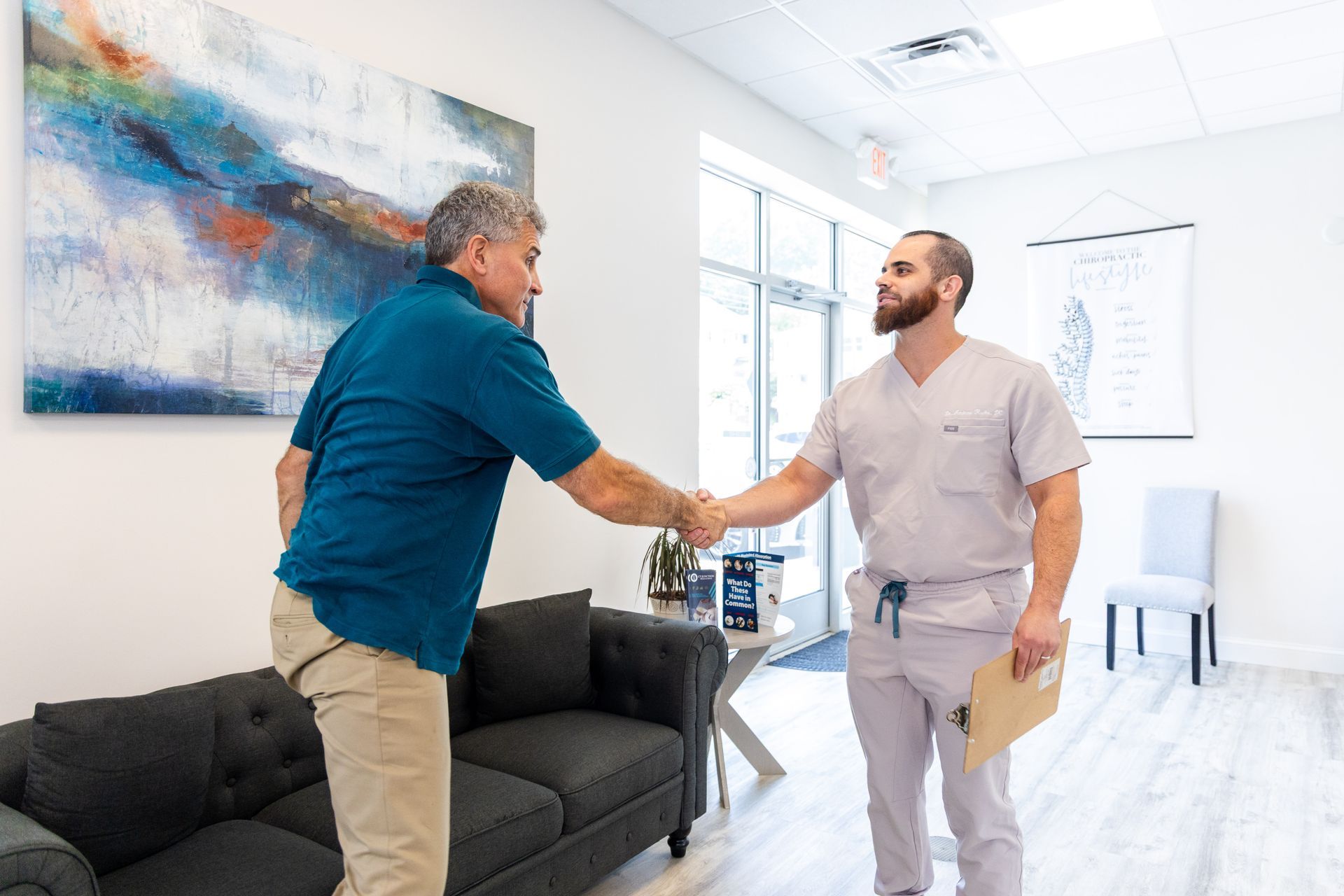
Two men shaking hands in a bright office lobby with a couch and abstract wall art.
By CT Junction Brain & Spine • July 8, 2026
See why CT Junction Brain & Spine holds a 5-star rating in Waterbury, CT. Real patient reviews on concussion care, chiropractic, and neurological rehab.

Woman holding her head with eyes closed, showing pain or stress against a gray background
By CT Junction Brain & Spine • May 12, 2026
Learn why busy places can cause dizziness after a concussion. Explore effective rehab strategies at CT Junction Brain & Spine.

Man holding his temples with eyes shut, grimacing outdoors on a sunny day
By CT Junction Brain & Spine • May 12, 2026
Learn why concussion symptoms come and go instead of staying consistent. Discover common triggers, sensory overload, and how neurological rehab can help stabilize recovery.

Hands cradling a pregnant belly, with a blue shirt and wristwatch visible
By CT Junction Brain & Spine • May 12, 2026
Struggling in crowds after a concussion? Learn why busy environments trigger dizziness and how vestibular and neurological rehab can help improve sensory processing.

Man reaching up to adjust a round wall fixture on a white wall with other fixtures and black markers
By CT Junction Brain & Spine • May 12, 2026
Learn how neurological rehabilitation differs from physical therapy and why it’s essential for effective concussion recovery.
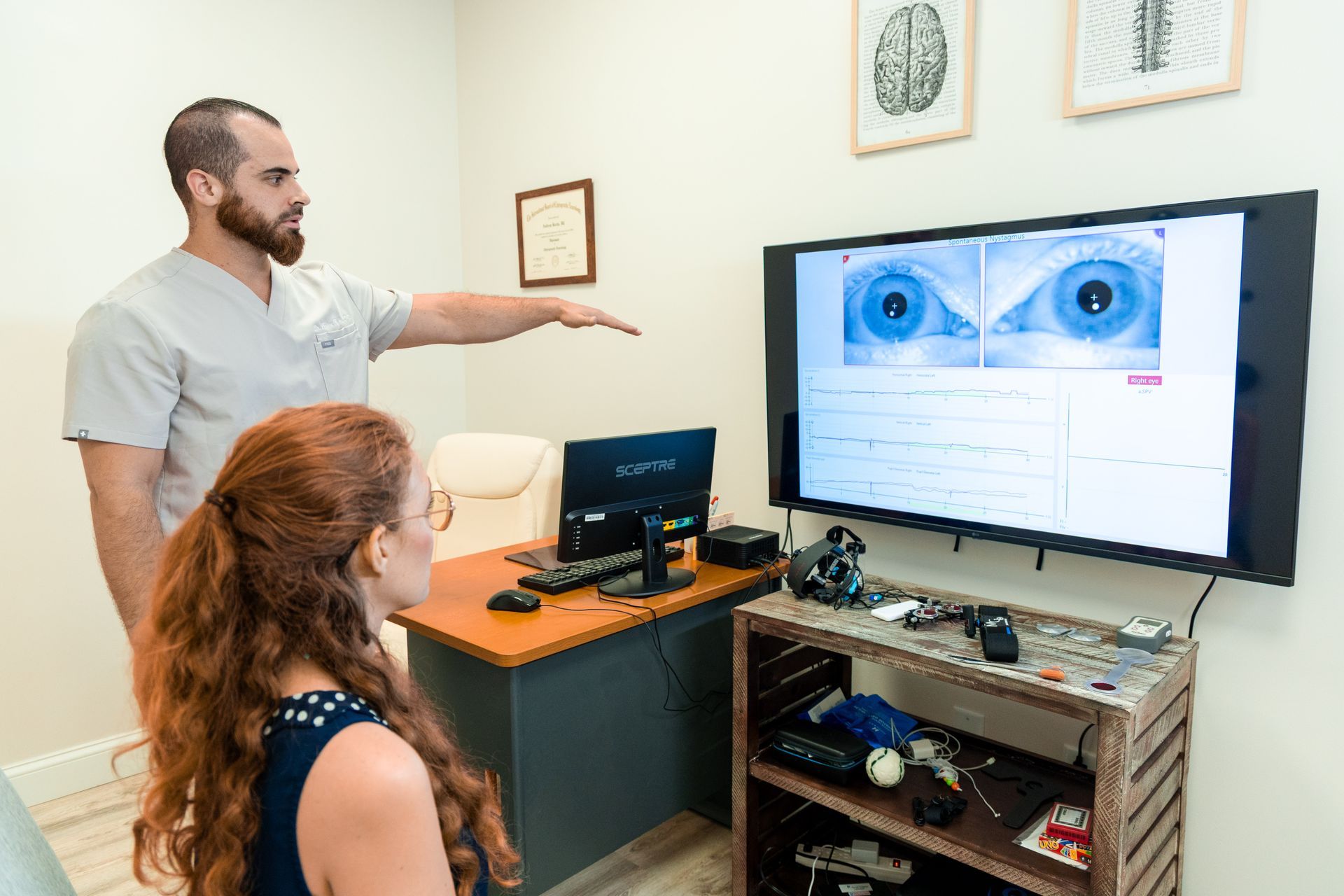
Two people reviewing an eye exam on a large monitor in a clinic office
By CT Brain & Junction • May 12, 2026
Eye movement issues can worsen balance & dizziness after a concussion. Contact us for expert treatment & rehabilitation.

Woman using a laptop in bed, leaning forward with a focused expression in a softly lit bedroom
By CT Junction Brain & Spine • May 12, 2026
Do screens worsen your concussion symptoms? Learn how eye strain, visual processing, and neurological stress impact recovery—and how rehab can help.

Person with head down on open books, surrounded by doodled scribbles, at a desk
By CT Junction Brain & Spine • May 12, 2026
Struggling with brain fog after a concussion? Learn what causes it, why it happens, and how neurological rehab helps restore focus, clarity, and cognitive function.
Show More